
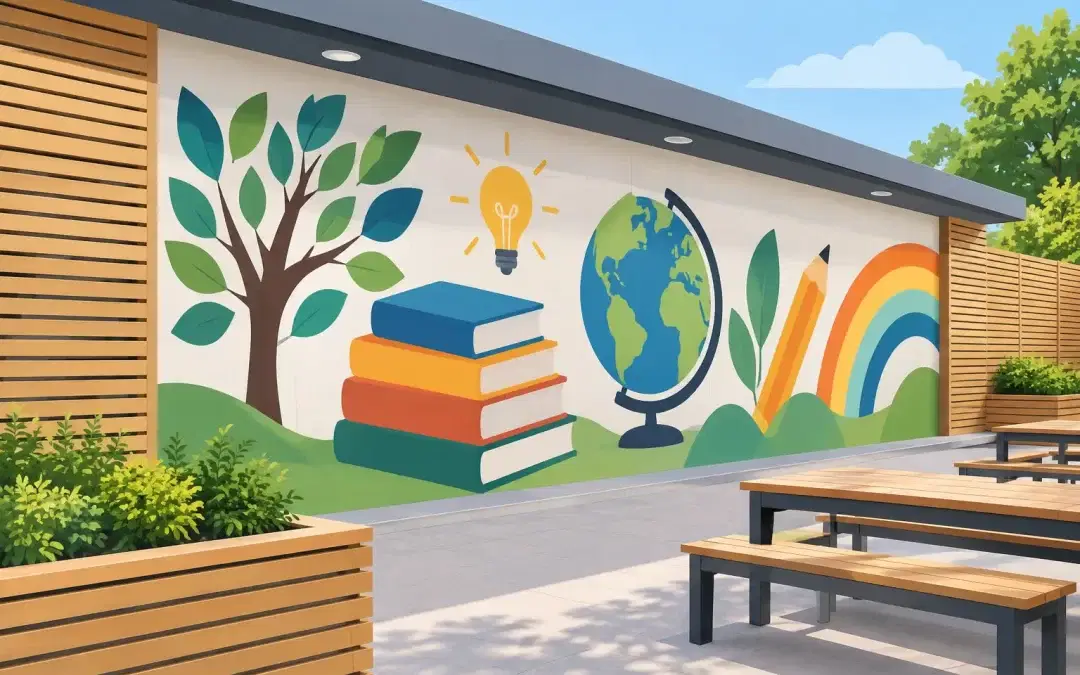
A corridor between lessons can be more than a route from one classroom to another. With custom school wall graphics, it can become a place where pupils revisit key vocabulary, see their school values in action, recognise their community and encounter learning without being asked to open a book.
For schools, this matters because much of the school day happens beyond the classroom. Pupils queue for lunch, wait outside halls, move between departments and spend breaktimes in shared spaces. Blank walls do little during these moments. Purposeful graphics turn them into passive learning opportunities that support teaching, strengthen belonging and make every area of the site feel cared for.
Why custom school wall graphics make a difference
A well-designed wall display does not replace excellent teaching. It extends it. Repeated visual exposure can help pupils become more familiar with the language, timelines, processes and concepts they meet in lessons. A times-tables display near a dining hall, a science graphic outside laboratories or a chronology along a history corridor gives pupils another way to encounter knowledge in context.
The benefit is not limited to academic content. Schools are busy, social environments, and pupils constantly take cues from the spaces around them. Clear, positive messages about respect, resilience, attendance, inclusion and mental wellbeing can reinforce the culture staff work hard to create. When values are visible and specific, they become part of the daily rhythm of school rather than words reserved for an assembly slide.
Customisation makes this communication more meaningful. Generic posters may fill a space, but displays using your school colours, logo, pupil language and local context feel rooted in the community. A geography panel can reference the local river or coastline. A history timeline can include significant people and events from the area. A behaviour display can use the wording pupils hear from staff every day.
Start with the moments pupils already have
The strongest projects begin with a simple question: where do pupils naturally pause, gather or pass through? This helps schools select graphics for genuine use, rather than choosing displays simply because a wall is empty.
Reception areas are ideal for communicating identity to families, visitors and prospective staff. A welcome display might bring together the school ethos, house system, safeguarding messages or an overview of what makes the school distinctive. It should feel warm and confident, but it also needs to stay relevant. Avoid filling this space with information that will date quickly unless it can be updated easily.
Corridors are particularly effective for curriculum reinforcement. Primary schools may use them for phonics, reading, number facts, vocabulary and topic learning. In secondary settings, department zones can become subject-specific environments, with formulae, literary quotations, maps, scientific processes or technical terminology displayed where pupils see them before and after lessons.
Dining halls, libraries and halls often suit broader messages. British values, wellbeing strategies, reading culture, healthy eating and school expectations can all work well here. In playgrounds, outdoor graphics can support active learning, social skills, playground rules and early years development while also making the environment brighter and more inviting.
Match the graphic to a clear educational purpose
Before considering colours, sizes or finishes, decide what each display should help pupils do. The answer may be to recall prior learning, use subject vocabulary accurately, understand a process, make positive choices or feel part of the school community. A clear purpose leads to a clearer design.
For curriculum content, prioritise information pupils can absorb in short bursts. A wall graphic is not a textbook page. It works best when it presents a useful sequence, a memorable visual framework or a small set of high-value facts. Timelines, labelled diagrams, word banks, number strategies and process maps are often more effective than dense blocks of text.
For ethos and wellbeing content, use language that is direct and recognisable. Pupils should be able to see what respectful behaviour looks like, where they can go for support or how to use a simple regulation strategy. In an early years setting, imagery and accessible wording will carry more weight than lengthy statements. In a secondary school, a more mature visual style may be essential if pupils are to take the message seriously.
There is a balance to strike. Too little information can make a display feel decorative rather than useful, while too much can make it difficult to read in a busy corridor. Good custom design creates hierarchy, giving pupils a clear starting point and allowing the key message to stand out at a glance.
Choose materials that suit school life
Educational graphics need to withstand far more than occasional viewing. They are placed in high-traffic areas where bags, chairs, fingers and cleaning routines are part of normal school life. Material choice should therefore be based on location, durability and maintenance rather than appearance alone.
For interior walls, rigid foam-board panels offer a practical, lightweight option. They provide a clean, professional finish, are manageable for school teams to install and work well across corridors, classrooms, dining areas and reception spaces. A wipe-clean protective laminate helps displays remain presentable where pupils are likely to touch them or where regular cleaning is required.
Outdoor walls demand a tougher specification. Weatherproof composite-aluminium panels are designed for playgrounds, external walkways and other exposed areas. Combined with UV-stable inks, they help colours remain vivid despite changing weather and sunlight. This makes them a sensible investment for schools that want outdoor learning and values messaging to look purposeful for years, not just for a term.
It is worth considering sightlines as well as materials. A large panel can be highly visible in a long corridor, but it must still be readable from the distance at which pupils will see it. Smaller, grouped panels may be more appropriate around doorways or narrow spaces. Manageable panel formats also make handling and in-house installation more straightforward.
Make the school recognisable in every space
Consistency across the site helps pupils understand that classrooms, corridors, playgrounds and shared areas belong to one connected learning environment. This does not mean every wall needs the same design. It means the visual language should feel joined up.
Use a considered combination of school colours, typography, icons and tone of voice. A primary school may choose bright, encouraging displays with clear imagery, while a secondary school may prefer a more refined departmental look. Both can still reflect the same core values and school identity.
Custom school wall graphics are especially valuable when a school wants to celebrate what is unique about its community. This could include a local-history project, pupil artwork, a community pledge, a house competition, a reading journey or a display of alumni achievements. These details give pupils a reason to look up and see themselves in the environment around them.
At Wall Graphics for Schools, custom projects can incorporate school logos, colours, local content and ethos messaging while retaining the practical qualities needed for busy educational settings. The result is not simply branded décor. It is a visible resource that supports the culture and curriculum staff are building each day.
Plan for longevity without making displays static
A durable panel should not force a school to live with outdated content. The key is to separate evergreen messages from information that changes frequently. Core values, subject foundations, wellbeing strategies and school identity can remain in place for years. Event dates, short-term targets, seasonal campaigns and pupil notices are better suited to changeable display systems elsewhere.
When planning a larger rollout, begin with a small number of high-impact spaces. A reception area, one main corridor and a playground wall can demonstrate the difference quickly. Schools can then expand the approach by subject, key stage or building as budgets allow.
Involve the people who use the spaces, too. Curriculum leaders can identify the knowledge worth reinforcing. Site teams can advise on wall condition and fitting access. Pupils can offer valuable insight into what they notice, understand and feel proud to see. This shared approach often leads to graphics that are both more practical and more valued.
Questions schools often ask
Can wall graphics be used outdoors?
Yes, provided the correct material is selected. Weatherproof composite-aluminium panels with UV-stable inks are suitable for playgrounds and exterior walls, where ordinary indoor displays would not last.
Can we include our own logo, colours and wording?
Yes. Bespoke graphics can reflect your school identity, values, local area, curriculum priorities and community rules. This is often what turns a display from a useful resource into a recognisable part of school culture.
Are the panels difficult to install?
Panels supplied in manageable formats are designed to make in-house installation more achievable. The best fitting method will depend on the wall surface, panel size and location, so it is sensible to assess each area before ordering.
The most effective school environments make a quiet promise to pupils: learning matters here, and you belong here. Thoughtfully chosen wall graphics help that promise stay visible in every corridor, classroom and playground.