
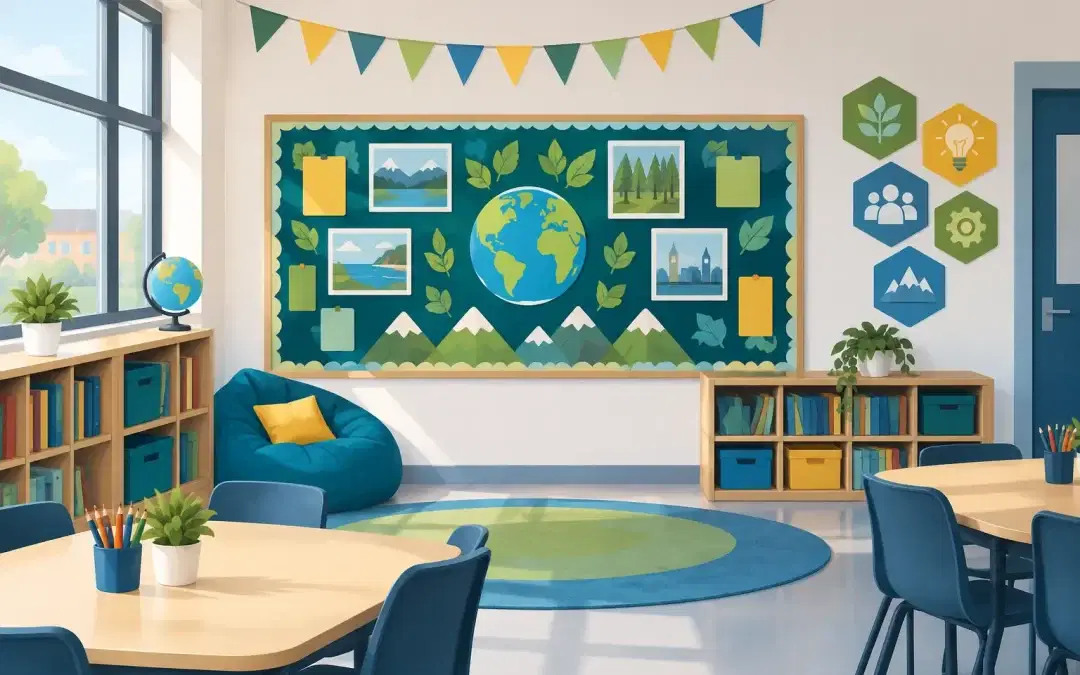
A corridor wall is often the first learning resource pupils see each morning, yet it can easily become an overlooked strip of magnolia paint. The strongest classroom display ideas treat every available surface as part of the school day: a prompt for recall while lining up, a reassurance during a difficult transition, or a visible reminder of what the school community stands for.
For busy UK schools, the goal is not to fill walls for the sake of decoration. It is to create a dynamic, immersive learning environment that supports teaching, builds belonging and remains practical to maintain. A well-chosen display can extend a lesson beyond its allotted hour without adding another task to a teacher’s workload.
Start with the moments pupils already have
The most effective displays are positioned around real pupil movement. Think about where children queue for lunch, wait outside classrooms, move between lessons or spend time during wet break. These are valuable opportunities for passive learning, particularly when the content is concise, visually clear and revisited often.
In a primary corridor, a times-tables wall or vocabulary display gives pupils familiar facts to notice repeatedly. In secondary settings, subject-specific panels near departments can reinforce key terminology, timelines, formulae or disciplinary thinking. A geography display beside a stairwell, for example, can prompt discussion of climate zones long after the topic has been taught in class.
Placement matters as much as content. A highly detailed panel above eye level may look impressive but will not work as a daily learning prompt. Put key information where pupils can see it comfortably, and match the level of detail to the time they have to engage with it. A dining hall benefits from short, positive messages and visual facts; a library or departmental corridor can support more in-depth curriculum content.
Classroom display ideas by purpose
Reinforce curriculum knowledge
Displays work best when they return pupils to the core knowledge they need to remember. Rather than reproducing every slide from a lesson, identify the facts, concepts and vocabulary that deserve repeated exposure.
For EYFS, this may mean phonics, number sense, seasons, feelings and everyday routines presented through accessible imagery. Primary schools can use displays for times tables, punctuation, reading genres, scientific processes, British history or world geography. In secondary schools, panels may support GCSE vocabulary, literary terminology, periodic-table knowledge, food technology safety or key historical periods.
The right balance depends on the subject and age group. A colourful, image-led display can help younger pupils access an idea independently, while older pupils may benefit from clear diagrams, subject language and carefully sequenced information. In both cases, avoid visual clutter. If every wall competes for attention, pupils are less likely to notice what matters.
Strengthen behaviour, values and wellbeing
A display does not need to be a curriculum panel to be educational. Shared expectations become more meaningful when they are visible in the places where pupils make everyday choices. Reception areas, dining halls, playground entrances and communal corridors are ideal for school values, behaviour principles and anti-bullying messages.
The most credible values displays use language that pupils recognise from assemblies, classrooms and conversations with staff. Schools may choose to feature kindness, respect, resilience, aspiration or responsibility, but the words carry more weight when paired with practical examples of what they look like in action.
Wellbeing displays should be equally purposeful. A calm-space panel can help pupils name feelings and identify strategies for regulation. A positive affirmation wall can support confidence, particularly in transition areas where anxiety may be heightened. For SENCOs and pastoral leads, consistent visual cues across the site can make routines and expectations easier to understand.
Make identity visible
A school should feel recognisably like itself from the gate onwards. Bespoke displays give schools the opportunity to incorporate their logo, colours, motto, house system, local landmarks or community history into the environment. This is particularly valuable in reception spaces, main corridors and halls used for events.
Local-history content is a strong example. It connects a national curriculum topic to places pupils know, helping them see that history exists beyond a textbook. Similarly, displays that celebrate pupil leadership, reading culture, sporting achievement or community partnerships can create a greater sense of ownership.
There is a trade-off to consider. Permanent branded panels should focus on messages with long-term value, rather than information likely to change each term. Save temporary notices and pupil work for flexible display boards, and use durable wall graphics for the content you want everyone to see all year.
Choose materials for the space, not just the design
A beautiful display quickly loses impact if it curls, fades or becomes difficult to clean. School walls face constant contact from bags, coats, chairs and hundreds of passing hands, so specification deserves as much attention as artwork.
For interior corridors, classrooms and halls, rigid foam-board displays provide a smart, manageable solution. They are lightweight enough for straightforward in-house installation while offering a clean, professional finish that paper posters cannot match. A wipe-clean protective laminate helps staff maintain a fresh appearance in high-touch areas.
Outdoor classroom display ideas need a different approach. Playground walls, fencing areas and exterior corridors are exposed to rain, changing temperatures and direct sunlight. Composite-aluminium panels are designed for these conditions, providing a weatherproof option that remains stable and presentable outdoors. UV-stable inks help colours stay clear and vibrant, rather than fading after a season of sun.
It is worth planning display locations with site teams before ordering. Check wall condition, access for installation, sightlines, safeguarding considerations and whether the content will be visible from playground equipment or pedestrian routes. Panels supplied in manageable formats make it easier for school staff to fit them without major disruption.
Build a display plan that staff can sustain
The most successful schools do not try to transform every wall at once. They begin with priority areas where a display can solve a clear problem: a tired entrance, an unproductive corridor, a playground wall with no learning purpose, or a department space that lacks identity.
Start by walking the site at pupil height. Note the points where pupils pause, the spaces that feel anonymous and the walls that could reinforce a current school priority. Then decide which messages should be permanent and which need regular updating. This prevents the common problem of investing time in displays that become outdated almost immediately.
Involve curriculum and pastoral leads early. A maths lead can identify the knowledge most worth revisiting; a wellbeing lead can make sure language is supportive and age-appropriate; a site manager can advise on surfaces and fitting. This creates a more coherent school environment and reduces duplicated effort.
Where budgets need to be phased, prioritise high-footfall areas first. One well-designed curriculum corridor can have more daily impact than several isolated posters inside individual classrooms. Wall Graphics for Schools can also create bespoke panels so a school’s own identity, local context and curriculum priorities are reflected throughout the design.
Keep displays active without constantly replacing them
Permanent does not have to mean static. Choose displays with enduring content, then refresh how staff use them. A teacher can ask a retrieval question while the class walks past a science timeline. Lunchtime supervisors can refer to a values panel when recognising positive behaviour. Form tutors can use a geography map or literary quotation as a two-minute discussion starter.
This approach protects staff time. The display is already there, visible and consistent, so it becomes an always-available teaching aid rather than another resource to prepare. Repeated visual exposure also helps pupils encounter information in different contexts, which can strengthen familiarity and confidence over time.
The best classroom display ideas do not merely make a school look cared for. They make the building work harder for pupils: prompting curiosity, reinforcing knowledge and reminding every child that they belong in a purposeful learning community.