
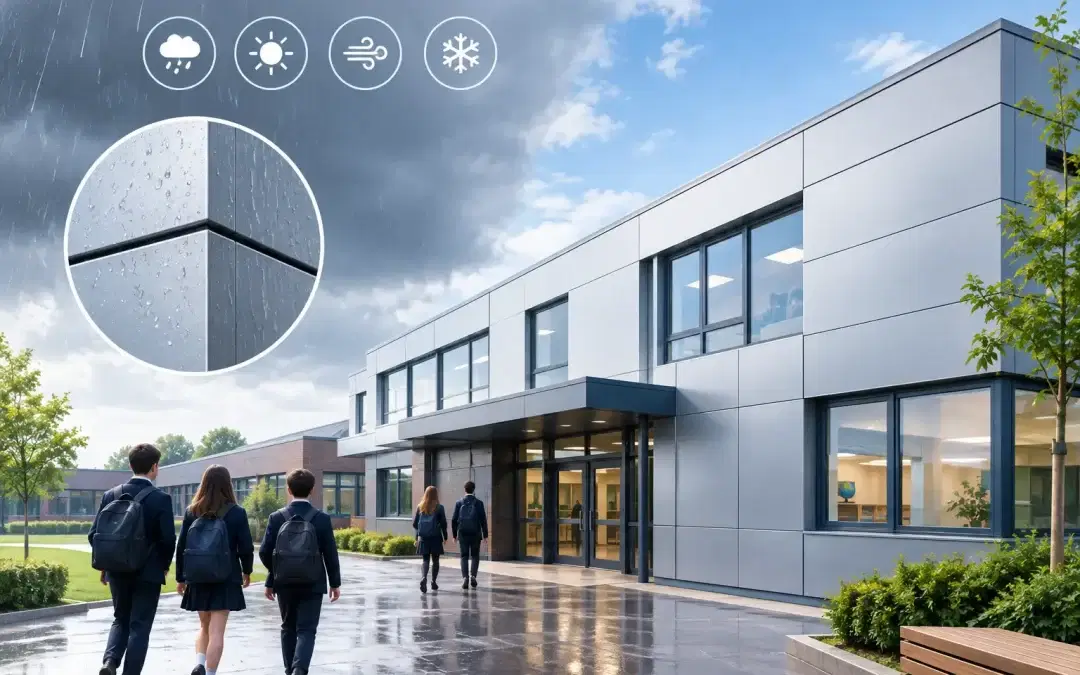
A playground wall has a demanding job. It may be exposed to driving rain, strong summer sunlight, muddy hands, footballs and the daily movement of hundreds of pupils. When schools ask, are aluminium panels weatherproof, they are usually asking a more practical question: will this display remain clear, safe and purposeful through term after term outdoors?
For the right product, the answer is yes. Composite aluminium panels are an excellent choice for exterior educational displays because they combine a weather-resistant surface with the rigidity needed for busy school sites. However, genuine outdoor performance depends on more than the word “aluminium”. The panel construction, print finish, installation method and location all make a difference.
Are aluminium panels weatherproof in a school setting?
Composite aluminium panels are designed to perform outdoors. They are typically made with aluminium outer layers bonded to a solid core, creating a flat, stable board that is much more suitable for exterior graphics than standard indoor display materials. Unlike paper posters, laminated sheets or basic foam board, they do not absorb water in normal weather conditions.
This makes them particularly well suited to playground learning walls, outdoor classrooms, entrance areas, sports spaces and covered walkways. A well-made composite aluminium display can keep curriculum information, wellbeing messages and school values visible even when the British weather is doing its worst.
Weatherproof does not mean indestructible, and it should not be treated as a vague marketing term. Outdoor panels need to cope with moisture, UV exposure, temperature changes and everyday contact. For schools, the most reliable specification combines composite aluminium with UV-stable inks and a protective wipe-clean laminate. Together, these elements help the display retain its colour, legibility and professional appearance.
Why composite aluminium works outdoors
The main advantage is stability. Outdoor displays need to stay flat against the wall rather than bowing, softening or deteriorating after repeated wet weather. Composite aluminium is rigid and lightweight enough to handle in manageable panel sizes, while providing a far more substantial finish than temporary signage.
Its aluminium faces form a protective barrier against rain and damp conditions. This is especially valuable on exposed playground walls, where displays may receive little shelter and are regularly splashed with water or marked by outdoor play. The smooth surface is also easy for site teams to wipe down when needed.
For an educational environment, that durability supports a bigger purpose. An exterior timeline, times-table wall, phonics display or local geography panel only creates passive learning opportunities if pupils can actually read and revisit it. Faded graphics and damaged corners quickly turn a learning resource into background clutter. A quality outdoor panel keeps the message present and usable.
The print finish matters as much as the panel
A weather-resistant board alone is not enough. If the printed graphics are not produced with outdoor use in mind, sunlight can reduce colour strength over time and constant cleaning can affect the finish.
UV-stable inks are used to help colours remain bright and text remain clear in daylight. This matters for school displays, where contrast, diagrams and carefully chosen colour coding support understanding. Protective laminate adds another layer of defence, helping the panel withstand moisture, surface marks and routine wiping.
This is why schools should assess the full display specification rather than choosing on board material alone. A composite aluminium panel, printed with UV-guaranteed inks and finished with protective laminate, is built as an outdoor learning resource rather than an indoor poster placed outside.
Where weatherproof panels make the biggest difference
Exterior walls are often underused because they are seen as maintenance concerns rather than teaching spaces. Yet they offer some of the most valuable opportunities for repeated visual exposure. Pupils pass them at drop-off, breaktime, lunchtime, transition and collection, giving key information a natural place in the rhythm of the school day.
A weatherproof maths display can prompt quick recall while pupils line up. A science wall can reinforce vocabulary before outdoor investigations. A values panel can make expectations visible at the point where pupils play, collaborate and resolve disagreements. For EYFS settings, colourful outdoor graphics can extend early language, number and world-themed learning beyond the classroom.
School identity also benefits from materials that look cared for. A bespoke welcome wall with the school logo, colours, house values or community message creates a strong first impression for families and visitors. More importantly, it signals to pupils that their environment has been designed for them. When the display remains bright and tidy, that feeling lasts.
Weatherproof is not the same as maintenance-free
Even high-quality aluminium composite panels benefit from sensible planning. The right location and installation will help them look their best for longer.
Consider how water travels across the wall. A panel should not be installed where it sits in standing water, receives constant run-off from damaged gutters or is repeatedly struck by equipment. It is also worth checking the condition of the mounting surface. A sound brick, block or suitably prepared exterior wall gives installers a reliable base and helps keep panels secure.
Fixings should be chosen for the wall type and panel size. Schools often appreciate manageable formats that can be installed by their own site team, but care is still needed to ensure each panel is level, properly supported and fixed at suitable points. Poor installation can create stress on the board or allow water to collect behind it.
Cleaning is straightforward. A soft cloth with mild soapy water is normally sufficient for everyday marks. Abrasive pads, harsh solvents and aggressive pressure washing are best avoided, as they may damage the protective finish or compromise the appearance of the graphics.
Choosing panels for exposed and sheltered areas
Not every outdoor wall experiences the same conditions. A covered corridor may only need protection from occasional wind-blown rain, while a playground perimeter wall can be exposed to full sun, frost and prolonged wet weather. Matching the product to the location is a sensible use of school budgets.
For sheltered external spaces, composite aluminium still gives a smart, long-lasting finish and the reassurance that a sudden downpour will not ruin the display. For exposed areas, prioritise a complete exterior-grade specification and discuss panel layout carefully. Smaller, manageable panels can be easier to install and replace individually if a particular area receives exceptional wear.
There can also be a case for selecting an indoor rigid foam-board display instead, particularly where a wall is fully enclosed and the resource is not exposed to weather. Using the correct material for each space avoids paying for unnecessary exterior specification indoors while ensuring playground graphics are properly protected.
A practical checklist before ordering
Before selecting outdoor educational graphics, schools should confirm four points: that the board is composite aluminium suitable for exterior use; that the printed design uses UV-stable inks; that a protective laminate is included; and that the chosen wall and fixing method are appropriate for the panel.
It is also worth thinking beyond the immediate display. Will the content still support teaching next year? Can it incorporate your school colours, logo, local history or values? Is the text large enough to read from the distance pupils will naturally stand? A weatherproof panel should be a long-term visual resource, not simply decoration for one event or term.
Bespoke design can make this investment work harder. A school can place its own behaviour language alongside playground expectations, connect a history display to its local area, or present wellbeing messages in a style pupils recognise across the site. The result is a more coherent, immersive learning environment where exterior walls actively support the culture staff are building indoors.
When should a panel be replaced?
A properly specified and installed panel should provide dependable outdoor service, but periodic visual checks remain good site practice. Look for damaged fixings, unusual movement, deep scratches, accidental impact damage or areas where the wall behind the panel has deteriorated.
Replacement is usually only needed when the graphics no longer meet their educational purpose, the content has changed, or physical damage affects the panel’s appearance or security. That makes composite aluminium a practical choice for permanent curriculum zones, core values walls and outdoor learning trails that schools intend pupils to use repeatedly.
The strongest outdoor displays do more than survive rain. They give pupils something worthwhile to notice on the way to lunch, talk about at break and return to during learning. With the right composite aluminium specification and thoughtful placement, an ordinary exterior wall can keep working for the school every day of the year.