
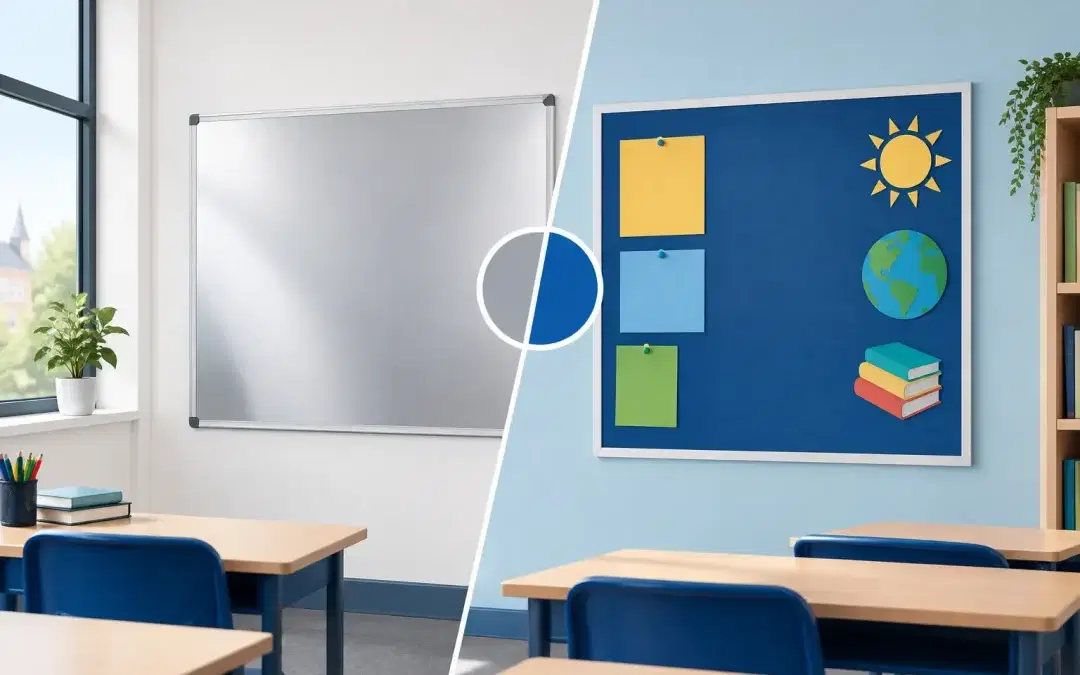
A display that looks excellent in a corridor can fail quickly when placed on an exposed playground wall. That is why the choice between aluminium versus foamboard should start with where pupils, staff and weather will meet it each day – not simply with the design or subject matter.
Both materials can turn blank surfaces into valuable passive learning opportunities. A times-table display outside a classroom, a wellbeing message near reception or a history timeline in the dining hall keeps knowledge, language and shared expectations visible beyond lesson time. The right panel material ensures that resource continues to look purposeful in a busy school environment.
Aluminium versus foamboard: the key difference
Rigid foamboard and composite aluminium panels are made for different conditions. Neither is universally better. The most effective choice depends on whether the wall is indoors or outdoors, how much contact it receives and how long it needs to perform without replacement.
Rigid foamboard is a practical indoor display material. It is lightweight, easy for school staff to handle and well suited to corridors, classrooms, libraries, halls and reception areas. When finished with a wipe-clean protective laminate, it gives schools a smart, durable surface for daily educational use.
Composite aluminium is the stronger option for exterior walls and other demanding areas. Its rigid construction is designed to withstand changing weather, moisture and the regular activity of playground life. Combined with UV-stable inks and a protective laminate, it helps curriculum content, school values and bespoke graphics remain clear and colourful outdoors.
The decision is therefore straightforward in most cases: choose foamboard for protected indoor walls and composite aluminium for outdoor locations. Where a display sits in a sheltered but high-contact area, such as a covered walkway, consider the amount of exposure and likely wear before deciding.
When foamboard is the right choice indoors
Indoor walls offer a major opportunity to extend learning without adding pressure to staff timetables. Pupils pass through the same spaces repeatedly, often while lining up, moving between lessons or waiting for an activity to begin. A well-positioned visual resource makes those moments more purposeful.
Foamboard is particularly effective where displays need to be manageable for in-house installation. Its lighter weight makes it a sensible choice for schools refreshing several classroom or corridor walls, or creating themed zones around the building. EYFS settings may use it for phonics, number, emotions and routines, while secondary departments can use it for subject vocabulary, key quotations, scientific processes or revision prompts.
It is also a strong option for identity-led spaces. A welcome wall in school colours, a core-values display near the entrance or a local-history timeline can help pupils recognise that the building belongs to their community. Bespoke designs can incorporate a school logo, house colours, behaviour expectations and content that reflects the area pupils know.
That said, foamboard is not an outdoor substitute. Even a wall that feels partly protected can be affected by wind-driven rain, cold, damp and sunlight over time. Choosing an indoor material for an external setting may appear to save money at the point of purchase, but it can lead to an earlier replacement and a less professional finish.
Best locations for rigid foamboard
Foamboard works best in dry, internal areas such as classrooms, corridor walls, libraries, dining halls, staff areas, reception spaces and indoor intervention rooms. It is ideal where learning content is updated by phase, topic or curriculum focus, and where staff want panels that are straightforward to position and install.
Its wipe-clean laminated finish is useful in communal spaces where marks and fingerprints are part of the school day. This makes it a practical choice for displays that need to remain welcoming and legible rather than becoming another maintenance task for site teams.
Why aluminium earns its place outdoors
Playgrounds, external dining areas and perimeter-facing walls can become dynamic, immersive learning environments. Yet they demand materials that are prepared for far more than occasional use. Rain, sun, temperature changes, footballs, coats and constant passing traffic all place pressure on a display.
Composite aluminium panels are designed for these conditions. They provide a stable, weatherproof base for educational wall graphics, making them suitable for playground times tables, outdoor science content, geography maps, reading prompts, active wellbeing zones and school rules. Rather than treating the journey between buildings as dead time, schools can make it part of the wider learning culture.
For many schools, aluminium also makes sense where a message must stay visible throughout the year. Core values, safeguarding reminders, inclusive language, pupil leadership boards and outdoor wayfinding all benefit from a material that remains present through every season. UV-stable inks help the design retain its impact, while the protective laminate supports regular cleaning.
The higher-performance material is especially worthwhile when installation access is difficult. If a wall requires careful planning, working around busy playground routines or arranging a suitable fitting time, it is sensible to select a panel designed for lasting external use from the outset.
Best locations for composite aluminium
Composite aluminium is the natural choice for exterior brick walls, fencing areas, playground boundaries, outdoor classrooms, covered play spaces and entrances exposed to the elements. It is also worth considering for areas with frequent contact, where a tougher panel gives site teams added confidence.
A covered walkway can sit between the two options. If it is fully enclosed and dry, foamboard may be appropriate. If rain can blow through, the wall experiences damp or the display is exposed to direct sunlight for long periods, composite aluminium is the safer long-term decision.
Consider the display’s job, not just its location
Location is the starting point, but the purpose of the display matters too. A short-term topic wall that changes each term has different requirements from a permanent multiplication reference or a school-ethos statement designed to welcome every visitor.
For indoor curriculum reinforcement, foamboard offers an effective balance of quality, practicality and ease of handling. A series of panels can create a coherent learning route through a key stage, with content placed at pupil height to encourage conversation and recall. Repeated visual exposure supports pupils in meeting key concepts again and again, without turning every corridor into a formal lesson.
For long-term exterior communication, aluminium is the better investment. It can carry the same educational value beyond the classroom while standing up to conditions that would shorten the life of less suitable materials. This is particularly valuable for schools using outdoor walls to strengthen numeracy, reading, wellbeing and positive behaviour at break and lunchtime.
There is also a budget consideration. It is tempting to compare only the initial price of two materials, but whole-life value matters more. A correctly specified panel protects the time spent choosing content, approving artwork and arranging installation. It also helps the school maintain a site that looks cared for, which supports pupil pride and reassures families visiting the school.
Installation and maintenance for busy school sites
Both materials are supplied in manageable formats to support straightforward installation, but planning remains worthwhile. Measure the usable wall area rather than the whole surface, allowing for doors, windows, noticeboards, drainpipes and uneven masonry. Check that the chosen location can be seen easily by the intended age group and that the content is positioned at a meaningful viewing height.
Before fitting, clean and dry the wall thoroughly. Site managers should also consider the fixing method for the surface and panel type, particularly for external masonry. A level, well-spaced layout gives a set of panels the appearance of a planned learning environment rather than a collection of posters.
After installation, routine care is simple. Wipe-clean laminated surfaces help staff remove everyday marks, keeping graphics clear and inviting. Avoid harsh abrasive cleaners that could damage the finish. In outdoor settings, periodic visual checks after severe weather are sensible, particularly around fixings and exposed edges.
Choosing materials for bespoke school graphics
Customisation is most effective when it works with the material and setting. A school may choose foamboard for an indoor reading corridor featuring its logo, house colours and carefully selected literary quotations, then carry the same visual identity onto composite aluminium playground panels for outdoor values and active-learning prompts.
This consistency matters. It helps pupils move through a coherent environment where the school’s expectations, curriculum and character are visible at every turn. For staff, it creates practical teaching prompts in the places where pupils naturally gather. For visitors, it shows that the school sees every surface as part of the pupil experience.
When selecting your panels, start with the route pupils take through the building and grounds. Choose foamboard where learning happens inside, and composite aluminium where the weather is part of the equation. The result is not simply a better wall display, but a school environment that keeps teaching, encouraging and welcoming pupils all day long.