
A blank corridor is not neutral space. It is a missed opportunity to remind pupils of the vocabulary they have learned, the values they share and the wider world waiting beyond the classroom door. Well-planned school wall displays turn the journeys between lessons, lunchtime queues and playground time into useful moments of visual learning.
For busy schools, the value is not simply decorative. The right display gives staff a practical teaching prompt, gives pupils repeated exposure to key knowledge and gives the whole site a clearer sense of identity. From Early Years phonics walls to secondary science pathways, a display can make learning feel present throughout the day rather than contained within one lesson.
Why school wall displays matter beyond the classroom
Pupils spend considerable time in communal areas. They walk through corridors several times a day, wait outside classrooms, eat in dining halls and gather in reception spaces. These areas can either feel tired and transactional or become part of the school’s learning environment.
Repeated visual exposure helps familiar ideas become easier to recall. A pupil who sees times tables, scientific vocabulary, historical timelines or literary quotations regularly is receiving low-pressure reinforcement alongside formal teaching. This is particularly valuable for knowledge that benefits from frequent retrieval, but it should support classroom teaching rather than attempt to replace it.
The strongest displays are purposeful. A colourful wall with no clear educational message may brighten a space, but curriculum-aligned content gives the investment a longer life. It allows teachers to refer to the display during lessons and gives pupils meaningful material to revisit independently.
This is also about belonging. A wall that reflects a school’s values, community agreements, pupil aspirations and local area sends a clear message: this is a place where learning matters and everyone has a part to play.
Choosing displays for the way pupils use each space
A display should suit its location, audience and likely level of contact. The content that works beautifully in a quiet sixth-form study area may be too text-heavy for a primary corridor, while a playground wall needs to withstand weather, footballs and constant use.
Corridors and transition areas
Corridors are ideal for curriculum journeys that pupils can absorb in short bursts. History timelines, geographical maps, maths methods, grammar guidance and science processes all work well here. Positioning matters. Content should be readable while pupils are moving, with clear headings, strong visual hierarchy and information broken into manageable sections.
Consider the routes pupils take most often. A Key Stage 2 corridor might support topic learning across the year, while a secondary department corridor can strengthen subject identity with more detailed, age-appropriate reference material. A display close to a classroom also gives teachers an immediate visual resource when introducing or recapping a lesson.
Dining halls, reception areas and shared spaces
Shared spaces are often the best places for culture-building messages. School values, wellbeing prompts, attendance messages, careers inspiration and pupil leadership displays can create a positive atmosphere without relying on notices that quickly date.
Reception areas deserve particular care. They set the tone for families, visitors and prospective pupils. A bespoke display featuring your logo, colours, ethos and community story makes the school’s identity visible from the first step through the door. It can be aspirational without feeling corporate when it is rooted in the real character of the school.
Classrooms and intervention spaces
In classrooms, relevance is everything. Early Years and primary settings often benefit from visual prompts that support language, routines, number sense, phonics and topic vocabulary. For older pupils, displays can clarify subject-specific terminology, practical processes and revision knowledge.
Avoid filling every available surface. Pupils, particularly those with sensory processing needs or additional learning needs, can find visual overload distracting. Choose a small number of clear, well-organised displays and leave enough calm space for the room to function. A thoughtful SENCO-led approach can make wall displays supportive rather than overwhelming.
Playgrounds and outdoor learning areas
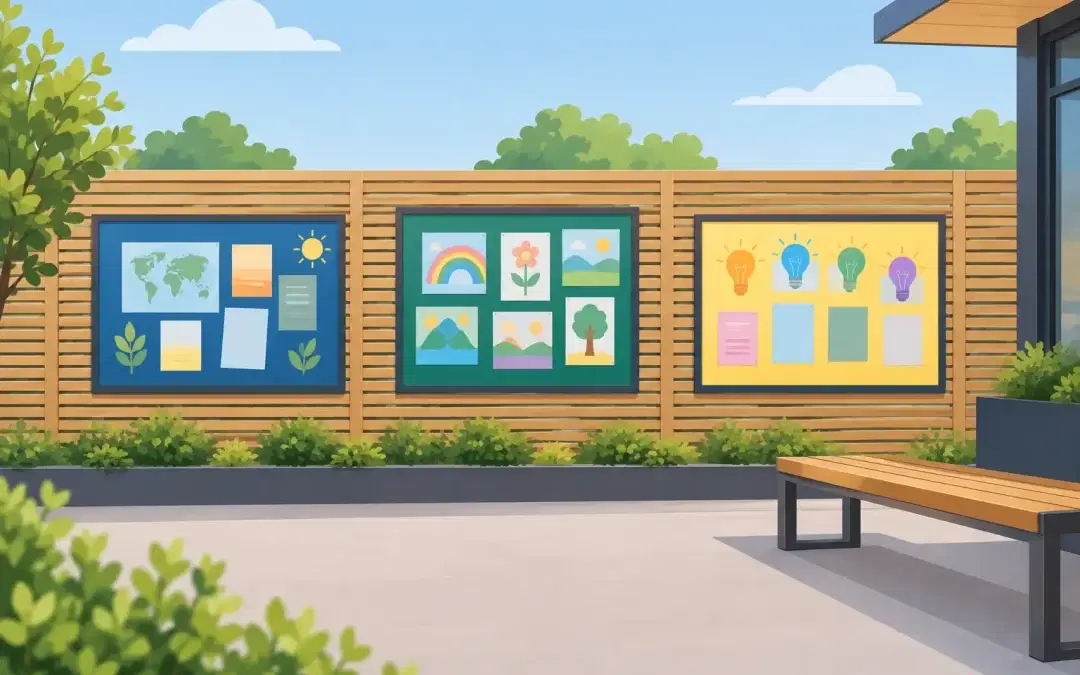
Outdoor school wall displays can extend learning beyond the building. Number trails, punctuation prompts, world maps, physical activity challenges, nature content and positive behaviour reminders all give pupils something constructive to engage with at breaktime.
Outdoor specification is essential here. Interior paper posters and standard display materials deteriorate quickly when exposed to rain, sunlight and changing temperatures. Weatherproof composite-aluminium panels, printed with UV-stable inks, are designed for exterior walls and playground environments where durability matters. They offer a practical route to year-round passive learning without a regular replacement cycle.
Make curriculum content useful, not just attractive
The most effective educational walls begin with a teaching question: what do we want pupils to remember, use or talk about more often? That question prevents displays becoming a collection of disconnected facts.
For example, a science wall might show the steps of an investigation, key vocabulary and visual reminders of safe practical work. A history display could set local events alongside national and global milestones, helping pupils place their community within a broader story. In food technology, clear process visuals can reinforce hygiene, nutrition and equipment knowledge before pupils enter a practical lesson.
Subject displays work best when curriculum leads can see their schemes of learning reflected in the content. This does not mean every panel needs to match one lesson exactly. It means the language, concepts and sequence should be recognisable enough for staff to use confidently. A geography map becomes more valuable when it supports the places and themes pupils are studying, rather than being included simply because it looks impressive.
There is a trade-off between specificity and longevity. Highly bespoke content can make a display deeply relevant, while broader curriculum foundations may serve the school across several year groups and planning cycles. The right balance depends on whether the wall is intended for a permanent shared area, a department base or a topic-focused zone that will change over time.
Build pride through bespoke school wall displays
Generic messages have their place, but schools are communities with their own stories. Bespoke school wall displays allow those stories to be represented properly, whether that means incorporating house names, school colours, pupil voice, local landmarks or a carefully chosen set of values.
This is especially powerful for values and wellbeing content. Pupils are more likely to recognise a message as part of everyday school life when it uses familiar language and reflects routines they understand. A clear, consistent visual approach across corridors, dining spaces and outdoor areas can reinforce expectations without every reminder needing to be spoken aloud.
Customisation also helps schools avoid the patchwork look created by years of one-off posters, fading notices and mismatched signage. A coordinated set of panels can bring consistency to a large site while still allowing each phase, department or pastoral area to retain its own purpose.
At Wall Graphics for Schools, this can include school logos, colours, local-history content and ethos messaging, so displays feel designed for the pupils who will see them every day rather than taken from a generic template.
Plan for durability, cleaning and installation
A display has to work operationally as well as educationally. In high-traffic areas, surfaces are touched, knocked and cleaned regularly. Flimsy materials often become curled, torn or marked, creating more work for site teams and reducing the impact of the message.
For indoor settings, durable rigid foam-board panels provide a smart, manageable option. A wipe-clean protective laminate helps displays remain presentable in busy corridors, classrooms and dining halls, while UV-guaranteed inks keep colours looking clear over time. For exterior use, composite aluminium offers the weather resistance required for playground walls and outside learning areas.
Panel format matters too. Large visual schemes do not need to mean difficult installation. Displays supplied in manageable sections can usually be fitted by an in-house site team, allowing schools to plan installation around safeguarding, lessons and access requirements. Before ordering, measure the available wall carefully, check for doors, switches and fire equipment, and consider viewing distance as well as the panel size.
Procurement should be straightforward. Schools often need clarity on material, intended location, quantity and budget before approval. Choosing a display system with clear specifications and purchase-order options helps turn a good idea into a practical project.
A wall that keeps working after the lesson ends
The most valuable displays do not demand attention once and then disappear into the background. They become familiar reference points: a pupil checks a spelling rule while walking to class, a teacher points to a timeline during discussion, a visitor sees the school’s values made visible, or children in the playground pause to solve a number challenge.
That is the real potential of a well-used wall. It keeps teaching, encouragement and school pride present in the spaces pupils already use every day.